Ceramic Arts Students Study Japanese Tea Bowls at the Freer Gallery of Art
Students from the ceramic arts program study Japanese tea bowls found in the collection of the Freer Gallery of Art in Washington, D.C.

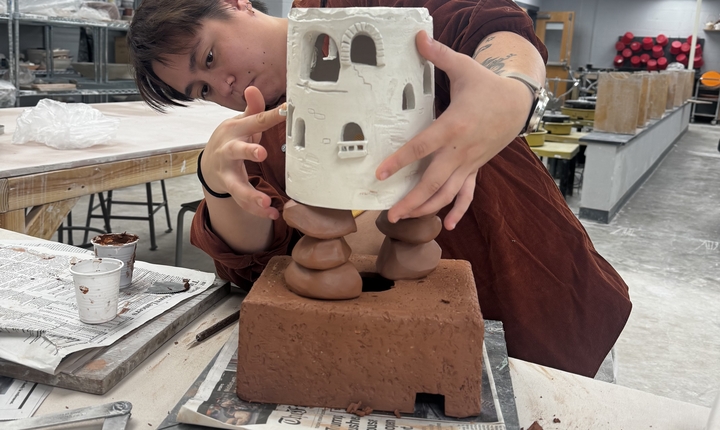
Explore your creativity and develop your artistic practice through Hood College’s diverse Studio Arts programs, offering opportunities for students at every level to learn, experiment, collaborate, and grow as artists.
Hood College offers a variety of undergraduate Studio Arts courses through the Department of Art & Archaeology, providing students with opportunities to explore a wide range of artistic techniques, materials, and practices. Areas of study include drawing, painting, ceramics (wheel throwing and handbuilding), sculpture, printmaking, photography, digital art and design, and mixed media. Courses range from introductory and foundational levels to intermediate and advanced studies, allowing students to develop technical skills, experiment with materials and processes, and further their own artistic exploration and research.
Advanced coursework may include regularly scheduled studio classes, independent studies, and specialized projects, offering students opportunities to refine their skills, explore individual interests, and develop a cohesive body of work. For advanced Studio Arts majors, Hood College also offers a dedicated Senior Studio space for students further along in their art degree. This space provides an environment where students can focus on developing their individual artistic practice, while connecting and collaborating with their peers. Senior Studio fosters a supportive creative community where artists can exchange ideas, learn from one another, gain inspiration, and continue developing their skills.
Fully Equipped Kiln Room: Three computerized L&L electric kilns, a manual Alpine front-loading kiln, and a computerized Olympic test kiln.
Professional Clay Processing Equipment: Large-capacity clay mixers, a pug mill, a slab roller, clay mixer, and extruder.
Fully Stocked Glaze Lab: Extensive glaze materials, studio-made glazes, and firing options ranging from Cone 6 to Cone 04.
Atmospheric firing is a unique ceramic process where materials introduced into the kiln during firing interact with the clay and glazes to create unpredictable, one-of-a-kind surfaces. Through techniques such as reduction, soda, salt, and wood firing, students can explore rich colors, natural textures, flashing, ash deposits, and beautiful variations that cannot be achieved through conventional electric firing. Each firing is an opportunity to experiment, embrace the unexpected, and discover new possibilities in ceramic surfaces.
Small Reduction Gas Kiln: Creates rich colors and surface variations through a controlled reduction atmosphere.
Cross-Draft Soda Kiln: Introduces soda into the kiln, creating distinctive glassy surfaces, flashing, and textured deposits.
Large Reduction Gas Kiln: Offers larger firing capacity and opportunities to explore atmospheric effects.
Large Salt Kiln: Uses salt vapor to create distinctive orange-peel textures and unique glaze-like surfaces.
Sanderson ECO Train Wood Kiln: A wood-fired kiln that produces beautiful ash deposits, natural flashing, and organic surface variations.
Two Raku Setups: Allow students to experience dramatic, hands-on firings with rapid cooling, post-firing reduction, and unexpected color effects.

Students from the ceramic arts program study Japanese tea bowls found in the collection of the Freer Gallery of Art in Washington, D.C.

This year, eleven graduate students and faculty members represented Hood College at the 2019 American Craft Council Show in Baltimore, MD.
Information will vary based on program level. Select a path to find the information you're looking for!