
Graduate Student Spotlight | Edyta Cousens
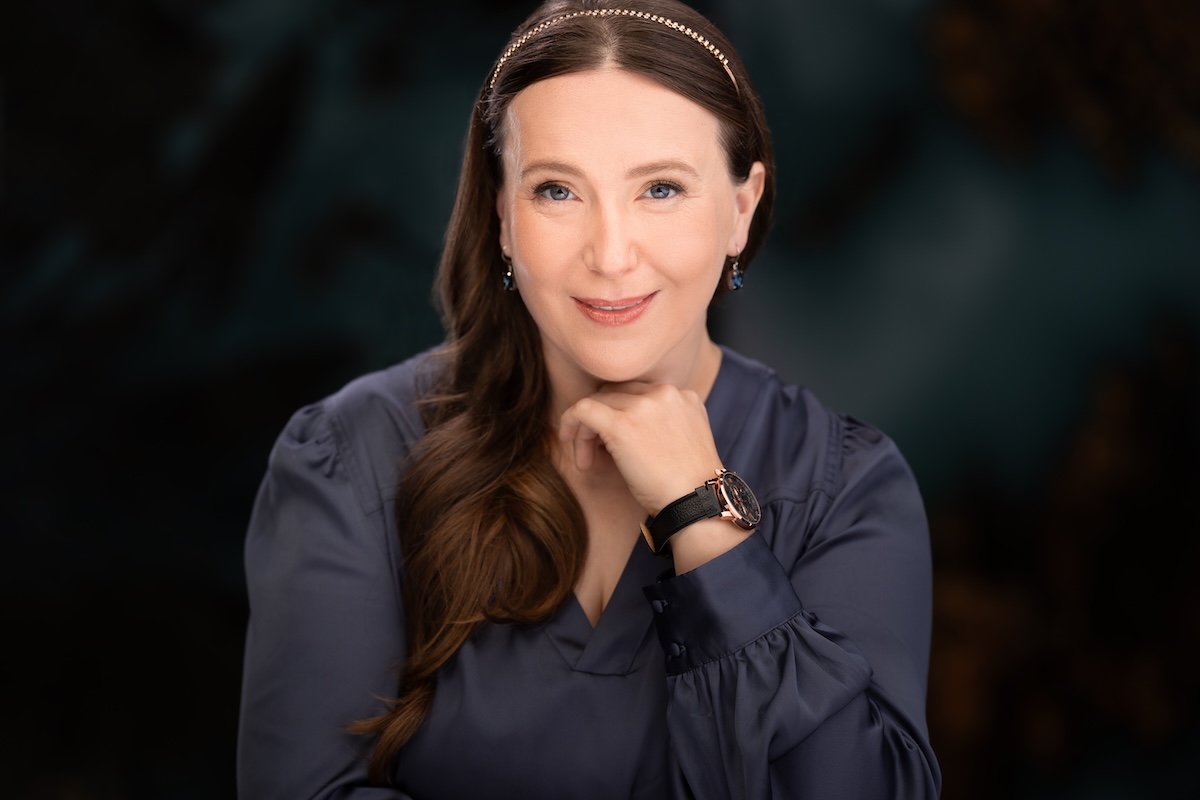
"The MFA in creative writing is helping me see how to build a life as a working artist."
Creative Writing MFA
Program
- Creative Writing (MFA)
Department
- English
Edyta Cousens is currently enrolled in Hood College’s creative writing MFA program. She also works as the historical fiction editor for Pergola, the student-run literary journal. Her studies in the MFA have coincided with her work on her short film “A Distance Apart,” a connection she explores in the conversation below.
Tell us about your background.
As a Polish-American immigrant, I’ve found that learning about a place’s history and culture is one of the best ways to find a sense of belonging. That was true in London, England, and in the places I’ve lived along the East Coast and out west. It’s especially true in Frederick, which has begun to feel like home.
There’s a particular joy in coming across a story that’s nearly been forgotten and finding a way to share it with people today. That interest also informs my work as the historical fiction editor for Pergola magazine. I’d be delighted to work with others who share a passion for retelling stories from the past through a modern lens.
How has your experience in the creative writing program been so far?
Returning to graduate studies in my mid-40s was a big decision, and delegate and senatorial scholarships from Maryland’s District 3 made it possible. Coming back has changed what education means to me. This is my second graduate degree, and the MFA in creative writing is helping me see how to build a life as a working artist.
Something clicked during the intensive writers’ residency at the start of the program. It’s easy to spend years waiting for someone to tell you that you have a voice. At some point, you have to give yourself permission to use it. With that comes a question I’m still exploring. How can I use that voice in service of my community?
Where does your interest in filmmaking come from?
My background is in dance theatre, and for a long time acting seemed like the natural next step. Finding my voice in writing opened up another possibility. Behind the camera, I get to ask whose experience we’re seeing and how a gesture, a sound or an image might bring us closer to their point of view.
Stepping into directing as a woman has meant learning to trust my vision and finding the courage to speak up for it. Having a dream is only the beginning. When people entrust you with their time and talents, it’s your responsibility to give them a clear sense of what you’re trying to create together and make room to bring something of their own to it. Making my first film taught me a lot about leading through setbacks. It also showed me how much magic can happen when we’re truly present with one another.
I’m grateful to the Endangered Species Theatre Project, to our volunteer crew and to composer Erik Spangler, who came from Baltimore to be part of the project. His original music and the Fuzzy Skulls vocalists’ voices helped bring the film to life. It was a joy to see “A Distance Apart” receive a nomination at the 72 Film Fest for Best Original Music.
What inspired“A Distance Apart”? What was it like to make the film and premiere it at the Weinberg Center?
I was introduced to the local Women in Film & Video group in Frederick as members were preparing for the 72 Film Fest. Their example inspired me to try making a film of my own. When the city gave us permission to film in Baker Park, the story began with a simple question. Who was Mr. Baker? Learning about Joseph Dill Baker’s personal losses and his years of service to Frederick made me wonder how grief can shape what we give back to others.
That question led to a fictional story about an author researching Baker’s life. When the author begins to fear that his own time is running out, he wonders which relationship he would try to mend first. Over those 72 hours, I wanted to honor what I was discovering in the archives and the places we had the privilege of filming in, while leaving room for spontaneity and improvisation.
At the premiere, I learned from a brochure that the Weinberg was marking its centennial. With Baker Park’s own centennial approaching and the country marking its 250th anniversary, it felt like a quiet privilege to sit in that audience and be part of a celebration bigger than any one film. I contemplated passing through a milestone, both historically and personally, and what stayed with me was seeing the local filmmaking community come together and imagining what we might make together next.
What has it been like balancing graduate study with filmmaking? How has Hood helped?
The balance took some adjusting. The script grew longer than we could shoot in 72 hours. Lesson learned. I’ve screened the festival cut, and there’s still material I’d like to develop. I also asked for a few extensions on coursework. What helped was how much the two areas of study fed into each other. Thanatology gave me a way to think about anticipatory grief and mortality. My MFA writing mentor helped me find my way into the script by asking what the main character longed for and what he feared losing.
That’s one of the things I value most about studying at Hood. An idea can start in a classroom and someday become a book or a film that gives people a chance to reflect on their own relationships. I enjoy learning how to carry an idea from one art form into another, and I’d love to see what might come from working with people in other creative departments at Hood.
Inspired by Edyta’s creative efforts? Ready to #GOFURTHER in your education and career? Explore our graduate programs, including the MFA program, and request more information about applying.
Are you ready to say Hello?
Choose a Pathway
Information will vary based on program level. Select a path to find the information you're looking for!