
Graduate Faculty Focus | Jennifer Locraft Cuddapah
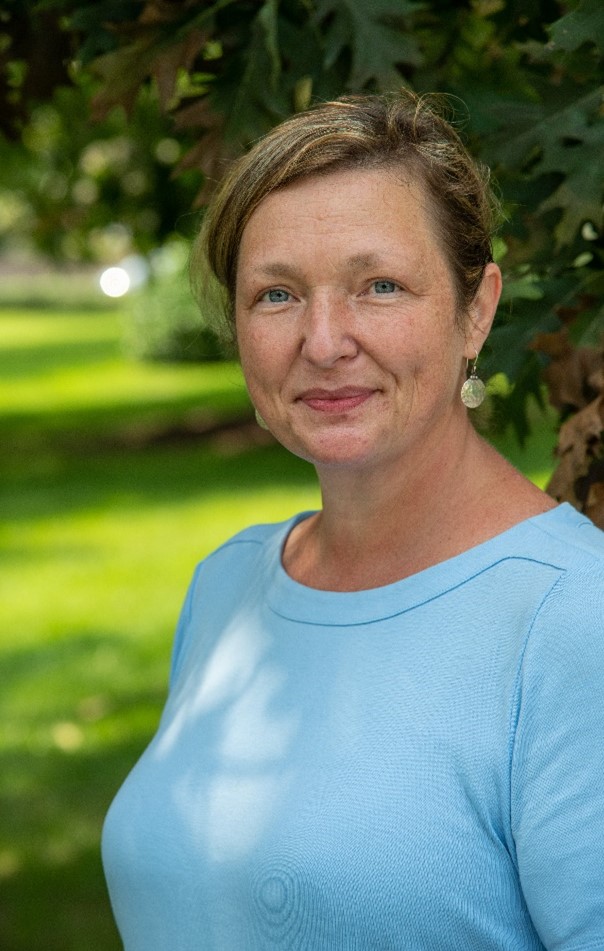
“At Hood, we infused the ethos of caring about our students into the doctoral program. The dissertation does not have to be a miserable, isolated experience. We scaffold the process so students are supported as they transform from graduate students into scholars.”
Jennifer Locraft Cuddapah, Ed.D.
Program
- Business Administration (Doctorate)
- Organizational Leadership (Doctorate)
Department
- Delaplaine School of Business & Communication
Jennifer Locraft Cuddapah, Ed.D., is a longtime educator and scholar whose career reflects a deep love of learning and a passion for mentoring teachers and doctoral students. With multiple master’s degrees and a doctorate in curriculum and teaching, Cuddapah has taught at both the K-12 and graduate levels and now serves as a core faculty member in Hood College’s doctoral program. Her work centers on thoughtful curriculum design, scholar-practitioner development and guiding students through the transformative process of doctoral research.
Could you share a bit about your academic and professional journey?
I originally went to college to be an elementary teacher and found that I genuinely loved school itself. After completing my bachelor’s at Boston College, I completed a second master’s in math and science education at Johns Hopkins, which deepened my knowledge of teaching across grade levels.
Already “addicted to learning,” I decided to pursue a doctorate at Teachers College, Columbia University, where I fell in love with teacher education and supporting new teachers. After completing my doctorate, I returned to Maryland and worked at Hopkins in teacher preparation until the program shifted online in 2012, which I knew I did not want. Someone suggested Hood, so I came to work with teachers in person.
When Hood launched its first doctoral program, I read the proposal, fell in love with it and asked to teach the qualitative research class. That casual beginning grew into my current work, focusing primarily on doctoral students and designing learning experiences that help them navigate the process of becoming scholars.
As a mentor for doctoral students, what guiding mindset or teaching approach do you rely on when supporting students through their research and professional development?
Doctoral students come in as high achieving, type A learners who are deeply dedicated, so the real challenge is not the coursework but the dissertation. It is a sustained research project unlike anything they have done before, and there is often a kind of hazing lore around it, as if it must be miserable or isolating. At Hood College, we reject that. We keep the rigor, but we embrace our ethos of caring for students and recognizing that the dissertation does not have to be miserable to be transformative.
My mindset is to backward-map the process, leverage the intense peer support students bring and build deliverables that help them stay motivated. Everyone eventually hits a point where it feels impossibly hard, and because they are used to being successful, that feeling is uncomfortable. Part of mentoring is preparing them for that moment, supporting them through it and reminding them to trust the process. A doctorate is not something you can buy or complete by checking boxes. It transforms you, and my role is to help guide students through that transformation.
What do you hope your students take away from working with you?
I hope they become mindful leaders who see scholarship as integral to their practice rather than something separate from it. I want them to question phrases like “the research says” by asking whose research, how it was conducted and whether anything contradicts it. They are becoming the experts, so understanding how knowledge is created is essential.
My deeper hope is that they experience a true shift in worldview, the kind of transformation where you cannot go back to thinking the way you did before. It is like realizing there is no Santa Claus. You remember what you used to believe, but you cannot unlearn what you now know. Doctoral education changes how they see their profession, themselves and their leadership. That internal shift, supported by research and scholarship, is what I most want them to take away.
What originally brought you to Hood College, and how has your time here influenced your work as an educator and researcher?
I came to the College in 2012 because my previous institution moved its teacher preparation program online, and I was firmly against online learning at the time. Hood College allowed me to continue working with teachers in person, which aligned with my philosophy. When the doctoral program launched, I fell in love with the curriculum and asked if I could teach the qualitative research course. That one request eventually shifted my focus almost entirely to doctoral education.
My time at Hood has consistently challenged me and helped me grow, especially during COVID when our eight hour Saturday classes had to move online. I had to reconfigure everything I did to ensure meaningful learning rather than just filling time. That experience softened my earlier stance against online learning. Hood students have also pushed me to rethink my assumptions. I have witnessed transformations I did not think would happen and felt great joy in being proven wrong. That curiosity and humility now fuel my sabbatical research on different profiles of doctoral students and the supports they need.
Is there a particular moment from your mentoring or teaching that stands out to you?
What stands out most are the moments when students surprise me by transforming in ways I did not expect. There have been times when I wondered whether someone would finish or whether the shift from student to scholar would occur, and then it does. Witnessing that evolution is pure joy, and being wrong about my early doubts is even better. Those moments remind me why I love this work.
Another influential moment was being forced into online teaching during COVID. Teaching an eight-hour doctoral class online felt impossible, and it pushed me to rethink everything about my methods and assumptions. That challenge changed my perspective and improved my practice. Both students and circumstances have reshaped my thinking, which is something I value deeply.
Is there anything else you would like to share, such as advice for doctoral students, insight from your research experience or thoughts on the value of mentorship in higher education?
My biggest advice is to research programs carefully and understand what you are comparing. Doctoral degrees vary widely. At Hood, the DOL is a scholar-practitioner degree and very different from a Ph.D., which is more theoretical. Cost, time and convenience matter, but nothing about earning a doctorate is easy, and real transformation requires support, structure and community.
Prospective students should ask programs about attrition and completion rates, speak with current students and understand what supports are in place. Starting a doctorate is not the same as finishing one. Hood’s completion rate is in the 70 percent range, well above the national average of about 50 percent, because of the scaffolding we provide. And beyond academia, I am someone who loves walking, listening to podcasts, spending time with my large extended family, cooking and music of all kinds except country. Those things keep me balanced and grounded outside the work I love.
Inspired by Professor Cuddapah’s story? Ready to #GOFURTHER in your career? Learn more about Hood College's graduate programs, including the Doctorate in Organizational Leadership.
Are you ready to say Hello?
Choose a Pathway
Information will vary based on program level. Select a path to find the information you're looking for!