

About this Program
Preparing Leaders, Transforming Communities.
Hood College’s Doctorate of Business Administration (DBA) is a terminal degree designed for experienced professionals seeking to advance their leadership, expand their influence and apply research to real-world business challenges. Open to professionals with an MBA or another business-related graduate degree, the program welcomes leaders from diverse disciplines and industries.
Program Overview
Whether aspiring to the C-suite, pursuing opportunities in think tanks or policy organizations, launching a consulting or coaching practice, teaching in higher education or seeking intellectual growth, DBA graduates gain the credentials, credibility and strategic perspective to achieve their goals.
Designed for working professionals, Hood’s DBA offers flexible degree completion through a Saturday-only course format that accommodates professional and personal commitments.
A distinguishing feature is Hood’s diverse, cohort-based learning environment, which brings together accomplished professionals across industries. Reflecting today’s cross-functional business landscape, this collaborative experience broadens perspectives, challenges conventional thinking and strengthens leadership across organizational boundaries.
Throughout the program, students benefit from personalized faculty mentorship while building lasting professional relationships and networks within the Maryland business community and beyond.
Doctoral student and alumni profiles
Listen to testimonials from Hood doctoral program alumni.
Meet our doctoral student veterans and hear their stories.
Program Highlights
- Terminal degree for experienced professionals with an MBA or other business-related graduate degree.
- Flexible degree completion with a Saturday-only format designed for working professionals.
- Diverse, cross-industry cohorts that foster collaboration, fresh perspectives and real-world learning.
- Personalized faculty mentorship throughout the doctoral journey.
- Valuable professional networks across industry, academia and community leadership.
- Advanced credentials and credibility for C-suite leadership, consulting, think tanks, teaching and organizational transformation.
Who Should Apply?
This program is ideal for:
- Mid- to senior-level professionals seeking to advance into C-suite and executive leadership roles.
- Leaders across diverse industries who want to apply research to complex organizational challenges.
- Professionals aspiring to teach in higher education or contribute to think tanks and policy organizations.
- Consultants, entrepreneurs and executive coaches seeking to strengthen their expertise and professional credibility.
- Lifelong learners committed to intellectual growth, innovation and meaningful impact.
Frequently Asked Questions
What can I do with a DBA?
A DBA can strengthen your credentials for C-suite and executive leadership roles, consulting, entrepreneurship, higher education teaching and think tank or policy-related work. Graduates develop advanced research and strategic leadership skills to address complex business challenges and influence organizational decisions.
Do I need an MBA to apply?
No. Professionals with an MBA or a master’s degree in a business-related field, such as management, finance, accounting, organizational leadership, business analytics or a related discipline, are encouraged to apply. Hood welcomes experienced professionals from diverse business disciplines and industries.
Is the program flexible for working professionals?
Yes. Hood’s DBA is designed for busy professionals, combining a hybrid learning format with Saturday-only in-person classes. This structure allows students to balance doctoral studies with their careers and personal commitments.
What makes Hood’s DBA different from other programs?
Hood’s DBA brings together experienced professionals from diverse industries in a collaborative cohort environment. This cross-industry learning experience reflects today’s business world, where cross-functional teamwork is essential. Combined with flexible scheduling, personalized faculty mentorship and applied research, the program prepares leaders to navigate complex organizational challenges.
Will I receive support throughout the program?
Absolutely. Students benefit from personalized faculty mentorship, particularly throughout the research process, and develop lasting professional connections with peers, faculty and leaders across industries.
Is Hood College accredited?
Yes. Hood College is institutionally accredited by the Middle States Commission on Higher Education (MSCHE), an accrediting agency recognized by the U.S. Department of Education.
Tuition & Fees
Funding Opportunities

Degrees Offered
- DBA
- DOL
Department Offering
Are you ready to go further?
Doctoral of Business Administration Program Information
Hood College's Doctorate of Business Administration (DBA) welcomes experienced professionals from diverse industries who are ready to advance their leadership, expand their expertise, and apply research to real-world organizational challenges.
Applicants with an MBA or another qualifying business-related graduate degree are eligible for consideration.
Application Process
To be considered for admission, applicants must complete the following requirements:
- Initial Eligibility Review
Submit a current resume to gofurther@hood.edu. The DBA Program Director will review your professional experience and academic background and may invite you to an initial conversation about your goals and program eligibility.
2. Online Application
Complete the online graduate application.
Academic Qualifications and Official Transcripts
Hold an MBA or another qualifying business-related graduate degree from an accredited institution, with a minimum GPA of 3.25 and completion of at least one statistics course.
Official electronic transcripts should be sent directly from the issuing institution through Parchment or emailed to gofurther@hood.edu.
3. Professional Experience
Submit a current resume demonstrating a minimum of eight years of progressive professional experience, including leadership responsibilities.
4. Letters of Recommendation
Submit two letters of recommendation:
- One from an employer or supervisor addressing your professional experience and leadership abilities.
- One from an individual who can speak to your leadership potential and professional qualifications.
5. Personal Statement
Submit a 400–500-word essay explaining your interest in pursuing a DBA, your professional aspirations, and how the program aligns with your goals.
6. Leadership Essay
Submit a 500–750-word essay responding to one of the following prompts:
- What role does leadership play in addressing the challenges facing organizations in the twenty-first century?
- Leadership is often described as the "art of influence." What lessons have you learned from a leader you admire?
- How does your leadership style compare with that of a leader you admire and respect?
- How does sustainable leadership, including economic, social, and environmental responsibility, align with your leadership philosophy?
7. Additional Admission Documentation
Submit one of the following, as applicable:
- Standardized test scores (SLLA, GRE, GMAT, or MAT).
Evidence of graduate-level culminating research experience, such as a capstone project, thesis, fieldwork, or action research project.
International applicants must also provide evidence of English language proficiency and a course-by-course credential evaluation from a NACES- or AICE-member organization, as applicable. Visit the International Graduate Admission Requirements page for details.
Admission Interview
Following an initial review of completed applications, qualified candidates will be invited to participate in a virtual interview with the doctoral review committee. This conversation provides an opportunity to discuss professional experience, leadership aspirations, and readiness for doctoral-level study.
Transfer credit policy for admitted students
Students may transfer a maximum of 8 graduate credits from an external, accredited institution, or another Hood graduate program prior to the first semester of study in the current program. Please review the full graduate transfer credit policy in the College catalog.
The Doctoral Program in Business Administration (DBA) is a cohort-based program with hybrid scheduling that provides flexibility for busy professionals. Coursework for the multidisciplinary program is completed in three years.
Students progress through 60 credits of coursework over a period of three years that include 27 credits of core leadership courses, 9 credits of research methods courses, 12 elective credits from the Delaplaine School of Business. Finally, 12 credits of dissertation research courses provide the structural support to ensure candidates complete their dissertations and earn their doctorate. Faculty continue to provide necessary one-on-one support for two semesters beyond the third year. If candidates need even more time to complete their dissertation work, additional support is provided with 1-credit courses every semester until they complete their dissertations.
Classes are offered on Saturdays in a flexible, hybrid format, with in-person classes on some Saturdays.
Saturday-Only Format
All courses are held on Saturdays, allowing working professionals to balance academic and career demands while maintaining consistency and structure throughout the program.
Cohort-Based Community
Students join a supportive cohort of peers from diverse industries, forming strong professional relationships and a sense of shared purpose that extends beyond graduation.
Faculty Mentorship
Faculty members offer individualized support at every stage—from coursework to dissertation—resulting in a high completion rate and a deeply personalized doctoral journey.
Leadership-Focused Impact
Students are encouraged to pursue research topics with relevance to organizational, community, or societal transformation, preparing them to lead at the highest levels.
Community Integration
The program fosters connections within the Hood College ecosystem, the greater Frederick business community, and professional organizations, enhancing post-graduation opportunities.
Photo Gallery
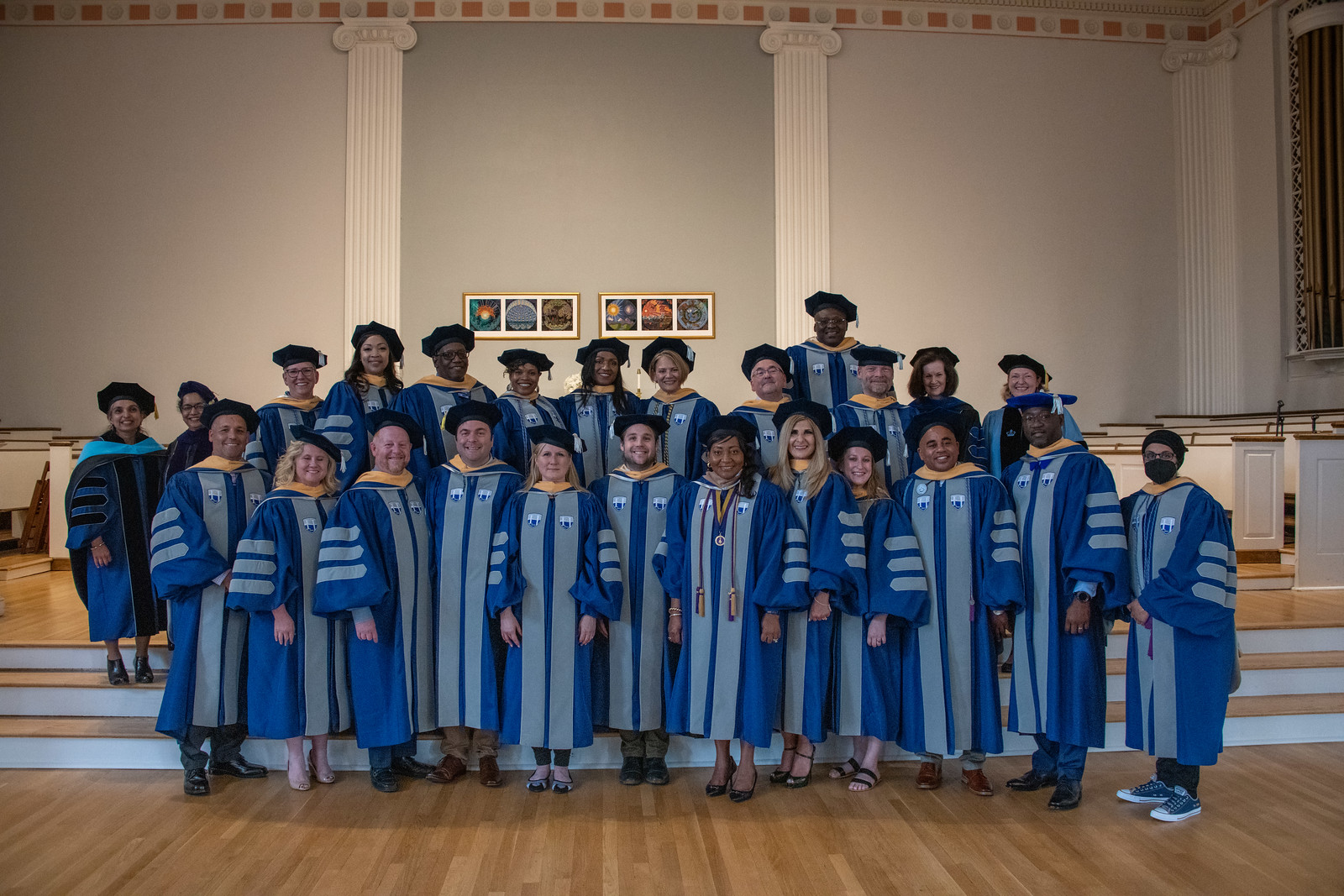
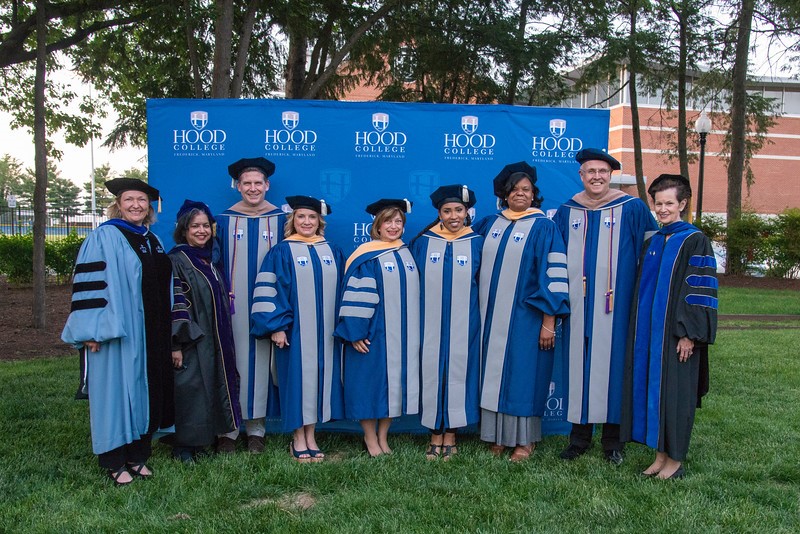
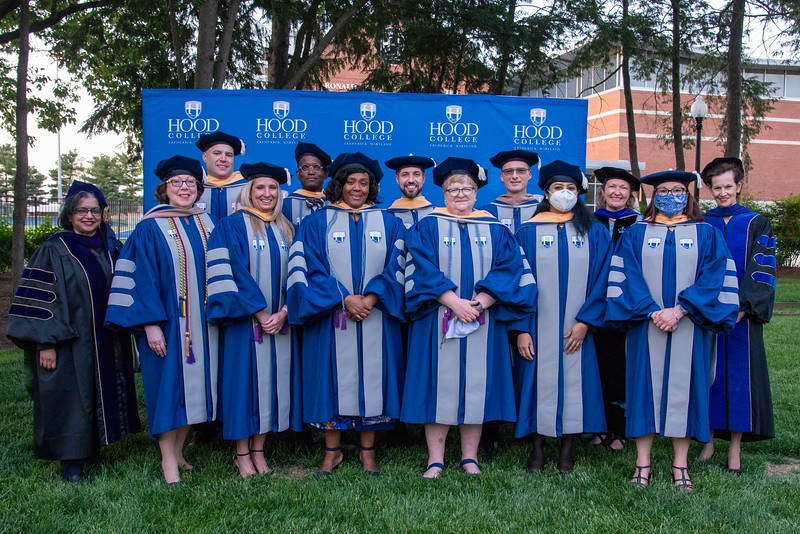
Graduates of the DBA program will be able to:
Conduct applied research that advances knowledge and improves organizational performance
Integrate leadership, ethics, and strategy in solving complex business problems
Demonstrate mastery of business theory and apply it in executive decision-making
Communicate as thought leaders, consultants, and academic contributors
Transition into senior leadership, adjunct teaching roles, or independent consulting
Earn the title “Dr.”, which brings professional recognition and opens doors in diverse sectors
Graduates of Hood’s DBA program are prepared to excel in roles such as:
Chief Executive Officer (CEO)
Chief Strategy Officer (CSO)
Organizational Development Consultant
Adjunct or Full-Time Business Faculty
Leadership Coach or Executive Trainer
Business Author or Speaker
Entrepreneurial and Nonprofit Leader
The DBA enhances your credentials, expands your influence, and positions you as a trusted authority in the business world.
3-4 Years
Average Completion Time
60 Total Credits
Program Contact

Program Director
Phone
301-696-3818
Email

Sonia Bowie
Doctoral Program Assistant
Phone
(301) 696-3327
Email

Director of Graduate Admissions
Phone
Office: 301-696-3603
Email

David Gurzick
- Professor of Management
- MBA Program Director
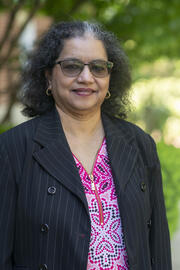
Anita Jose
- Professor of Management

Tianning Li
- Associate Professor of Finance
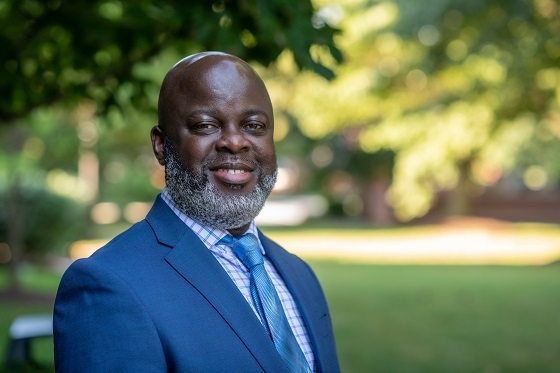
Doctoral Alumni Spotlight | Manasseh Abijah
“As a recent graduate of Hood College's Doctoral Program in Organizational Leadership, I am especially interested in bridging scholarship and practice by translating research into actionable solutions that help people, organizations and communities succeed. I am grateful to Hood College for its role in that journey and look forward to continuing to contribute through teaching, research, consulting and writing.”

Graduate Student Spotlight | Charmyra Fleming
“Hood College was the first program where I felt truly supported and aligned—with faculty who understood my goals, a close-knit cohort and an open door culture. I don’t think I would’ve come this far anywhere else.”

Graduate Alumni Focus | Meagan “Rabbit” Prophet, DBA’25
“I was drawn to Hood College for its close-knit academic community, strong mentorship culture and the flexibility to align my dissertation with both identity and emerging interests.”