
Graduate Faculty Spotlight | Ariana Gangloff
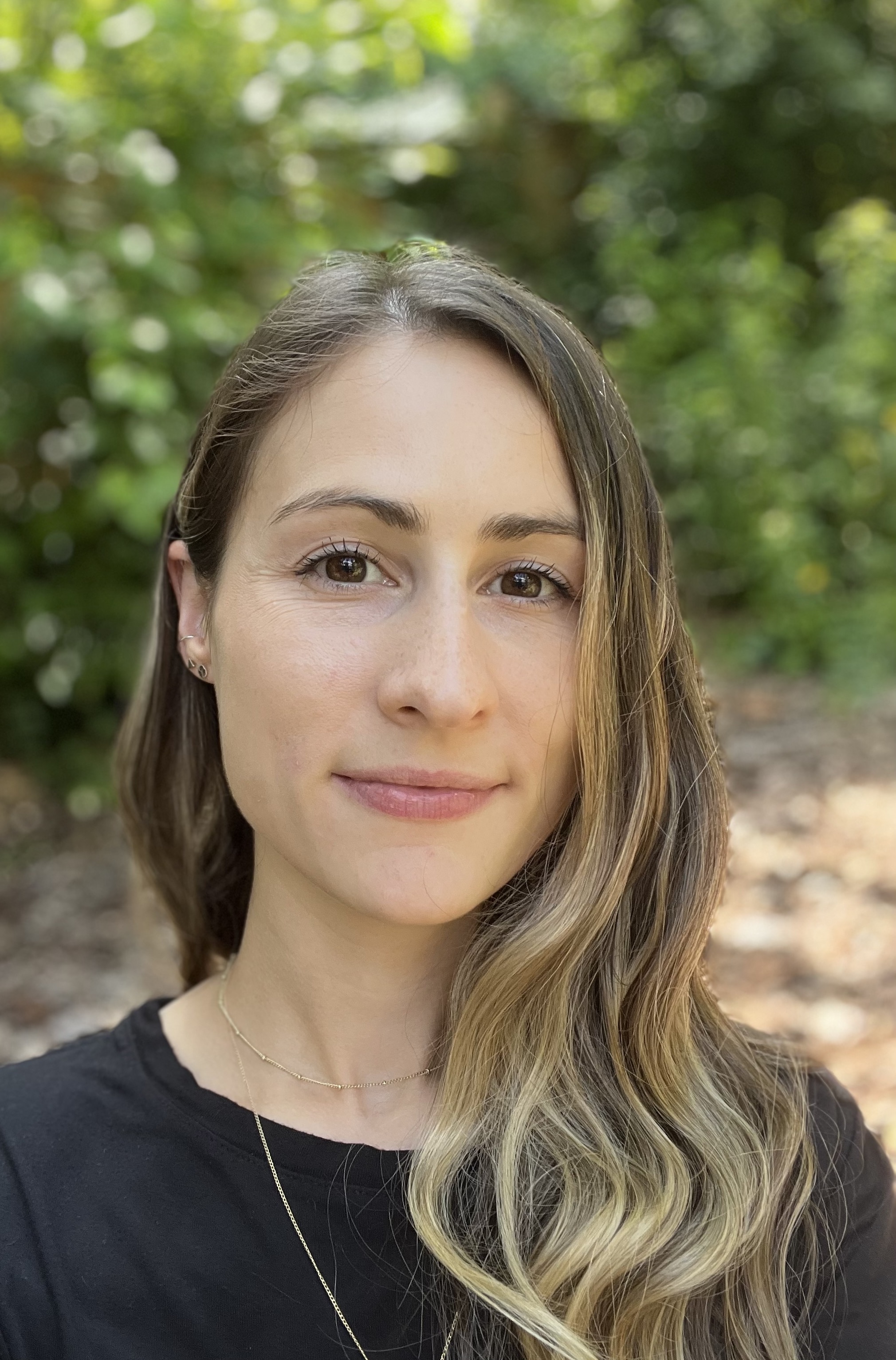
“The curiosity and enthusiasm that students share in the classroom is truly contagious. My students teach and inspire me every day through their questions, their artwork and the stories they share about their personal and professional lives.”
Clinical Mental Health Counseling M.S.
Program
- Counseling, Clinical Mental Health (M.S.)
Department
- Counseling
Arianna Gangloff is a Licensed Clinical Professional Counselor and Licensed Clinical Professional Art Therapist in Maryland. She specializes in trauma-informed care and teaches undergraduate and graduate courses in art therapy and counseling at Hood College. With a background in trauma work and a passion for creative expression, she empowers students to explore the healing potential of art while fostering safe, compassionate learning environments.
Tell us about yourself and your professional journey.
I graduated from the George Washington University’s M.A. in art therapy program in 2016. The program places a strong emphasis on trauma-informed care, which really primed me for a career specializing in trauma work. One of my internships while completing the program was at Walter Reed National Military Medical Center, where I provided art therapy services to active duty service members.
After graduating, I spent several years as a school-based child and family therapist. Throughout my career, I’ve worked with children, adolescents and adults in a range of outpatient settings, with the majority of my experience being in private practice. I currently work in a group practice, where I focus primarily on trauma work with older adolescents and adults.
You’ve created an incredibly impactful and popular one-credit course on Art Therapy for Trauma. Could you share a bit about what inspired you to integrate art therapy into your teaching practice?
I actually came to Hood to teach art therapy! I’ve been teaching undergraduate courses here since fall 2023. When the graduate counseling program approached me about teaching a new elective, it didn’t take long for me to land on the topic of integrating art therapy and trauma work.
This intersection is central to my clinical practice, and it’s something I’m extremely passionate about. I believe that for students to truly grasp the power of therapeutic art-making, they must experience the creative process first-hand through experiential exercises. This is why the course is packed with opportunities for students to make their own visual art, painting, drawing, sculpture, collage, mixed media and more.
As a faculty member, do you have a guiding mindset, theory or philosophy that shapes how you engage students, especially when exploring trauma-informed creative practices?
I approach teaching with the same trauma-informed mindset that guides my work with therapy clients; my primary goal is to create a safe, non-judgmental space that honors and fosters each individual’s innate creativity.
Learning about trauma work can feel very heavy, and it often brings up painful personal material for students. I think it’s critical to prioritize students’ sense of safety, connection and choice in the classroom. For example, students are offered considerable flexibility in what they create, how they create it and whether or not they share their artwork with the rest of the class.
With the class becoming so popular among students, what do you hope they take away from the experience, both personally and professionally?
There’s a lot of misunderstanding and misinformation out there about art therapy—what it is and what it is not. One of the biggest things that I want students to take away from this course is a clear and accurate understanding of the field.
Art therapy is a master’s-level mental health profession requiring specialized training and licensure. As counselors-in-training, my students cannot go on to practice art therapy without the appropriate additional training and credentialing. That said, students can absolutely integrate therapeutic art-making into their current and future work. Overall, I want students to take away practical techniques for ethically incorporating art-making into trauma counseling, along with a solid sense of when to refer clients out for more specialized art therapy services.
What made you choose to teach at Hood College, and how has the Hood community supported or influenced your work in art therapy and trauma-informed education?
In addition to teaching the graduate elective and two undergraduate courses in art therapy, I’ve had the opportunity to lead some independent study courses and to serve as faculty advisor for several students’ internships in art therapy, psychology and art.
I absolutely love teaching at Hood! Working with students helps me to reconnect to foundational principles in art therapy and counseling, to keep up with new literature in these fields, and to stay curious and thoughtful in my clinical practice. The curiosity and enthusiasm that students share in the classroom is truly contagious. My students teach and inspire me every day through their questions, their artwork and the stories they share about their personal and professional lives.
What has been the most rewarding part of teaching this program?
One of the most rewarding aspects of teaching this elective is getting to witness my students’ transformational journeys from the start to the end of the course. I see students reconnecting to their own creativity, noticing and enjoying even small moments of creativity in their daily lives and sometimes even revisiting long-forgotten creative hobbies.
This past semester, I had a particularly special experience when a former student joined my graduate elective. She had been part of my very first cohort of undergraduate art therapy students, and I had served as her faculty advisor for an art therapy-based undergraduate internship. She went on to enroll in the graduate counseling program, and it was such a pleasure to have her in class again!
I hope to continue teaching at Hood for years to come and to expand students’ access to learning in the field of art therapy, through both coursework and community connections.
Inspired by Arianna’s story? Ready to #GOFURTHER in your career? Learn more about Hood College's graduate programs, such as clinical mental health counseling.
Are you ready to say Hello?
Choose a Pathway
Information will vary based on program level. Select a path to find the information you're looking for!