
Student-Faculty Research Turns Soybeans Into Commercial Products
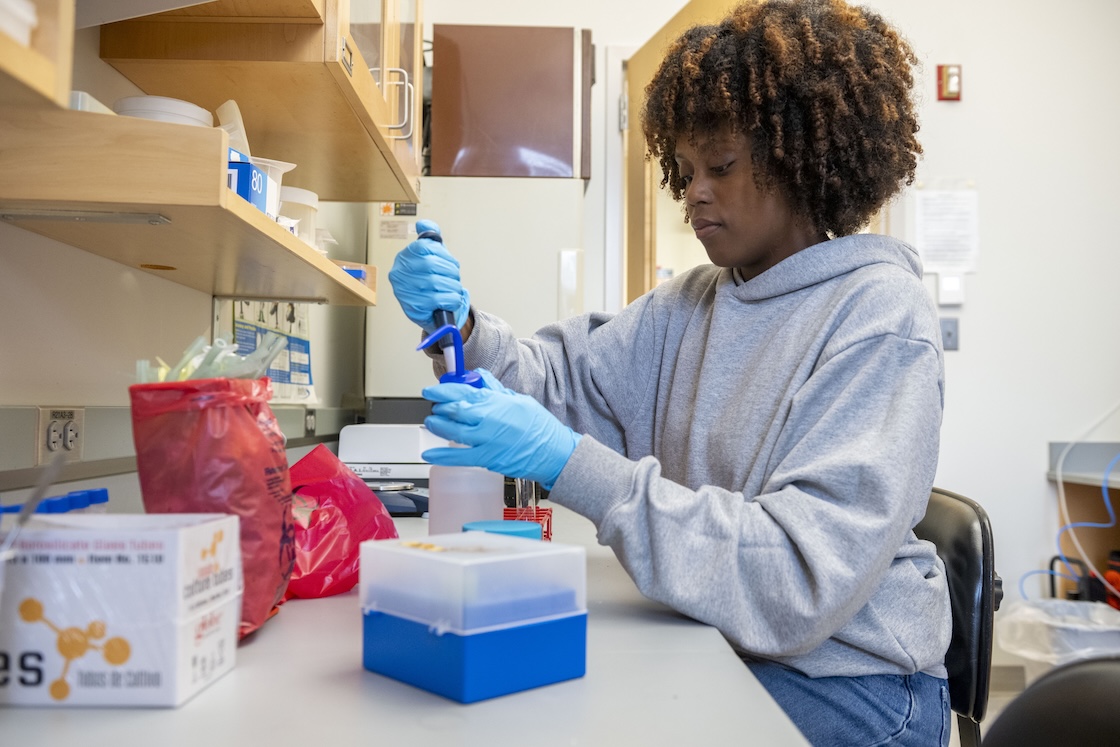
Erica Correll ’26 and Elisha Kabongo ’27 conducted research on soybeans that was published in a scholarly journal and presented at a national conference.
Worth the Work
Program
- Biology (B.A.)
Department
- Biology
Two Hood College biology majors, Erica Correll ’26 and Elisha Kabongo ’27, were part of a student-faculty research project with Associate Professor of Biology Daehwan Kim, Ph.D., that examined the potential to turn agricultural waste into a commercial product. With support from the Maryland Soybean Board and Hood College Faculty Development Committee research funds, the project focused on transforming soybean straw into lactic acid, which can be used in food production and pharmaceuticals. It can also be used to produce polylactic acid, a biodegradable plastic.
“We compared raw soybean straw with samples pretreated with sodium hydroxide and hydrogen peroxide. After pretreatment, we used enzymatic hydrolysis to break down the cellulose and hemicellulose into fermentable sugars. We then used Lactobacillus pentosus to ferment those sugars into lactic acid,” said Kabongo. “We wanted to analyze how the different pretreatments affected sugar production and how efficiently soybean waste could be converted into a valuable product like lactic acid.”
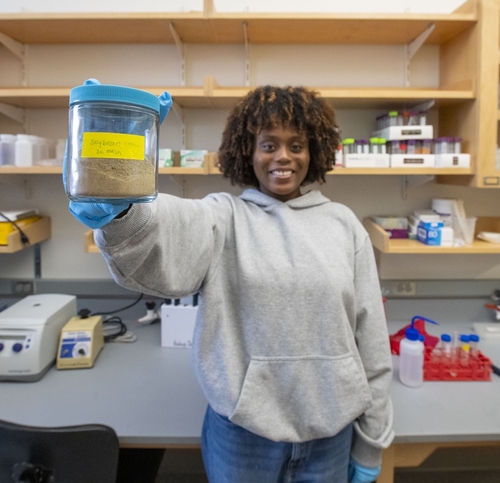
“The biggest surprise that I found during my research was that untreated soybean hulls can be effectively converted into fermentable sugars and then into ethanol,” added Correll.
Their research culminated in two articles published in “Frontiers in Bioscience-Elite,” including “Enzymatic Hydrolysis of Soybean Hull Without Pretreatment and Its Enhancement of Bioethanol Production Using Xylose-Fermenting Escherichia coli (FBR5)” and “Enhanced Lactic Acid Production from Soybean Waste Using a Xylose-Fermenting Lactobacillus pentosus Strain.”
“Seeing the research published made me feel extremely accomplished,” said Kabongo. “It also helped me better understand how impactful scientific research can be, whether that impact is economic, environmental or directly related to people’s health.”
Correll and Kabongo had the opportunity to present their research at the 2026 National Conference on Undergraduate Research in Richmond, Virginia.
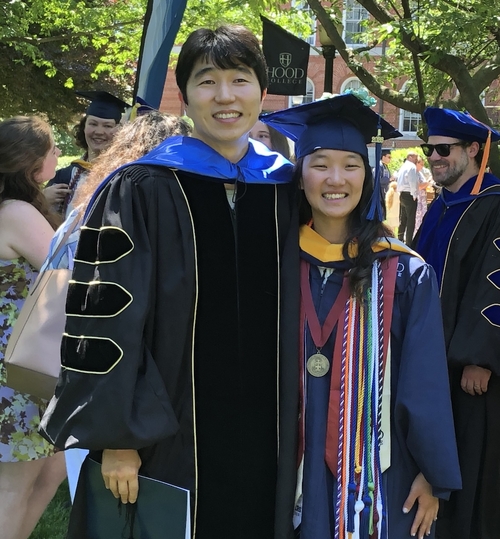
“We connected with students from all over the country and learned about the amazing research they were doing,” said Kabongo. “Representatives from different universities were also there, which allowed me to learn about potential graduate schools and build those connections as well.”
Correll, who currently works as cell therapy specialist for Kite Pharma, encourages other students to get involved with student-faculty research projects, regardless of major.
“Other Hood students should consider getting involved in student-faculty research. You get to know the faculty you work with, and you can figure out what you like and don’t like in your research,” said Correll.
Kabongo agrees, noting that the real-world experience offers applications beyond typical classroom assignments.
“Research allows you to apply what you learn in class to something real. Instead of completing something just for an assignment or grade, you are contributing to an actual project and gaining experience that can help you figure out what you want to do in the future.”
Learn more about student-faculty research in the Department of Biology.
Are you ready to say Hello?
Choose a Pathway
Information will vary based on program level. Select a path to find the information you're looking for!