
Laura Brown ’08 | Executive Director of Asylee Women Enterprise
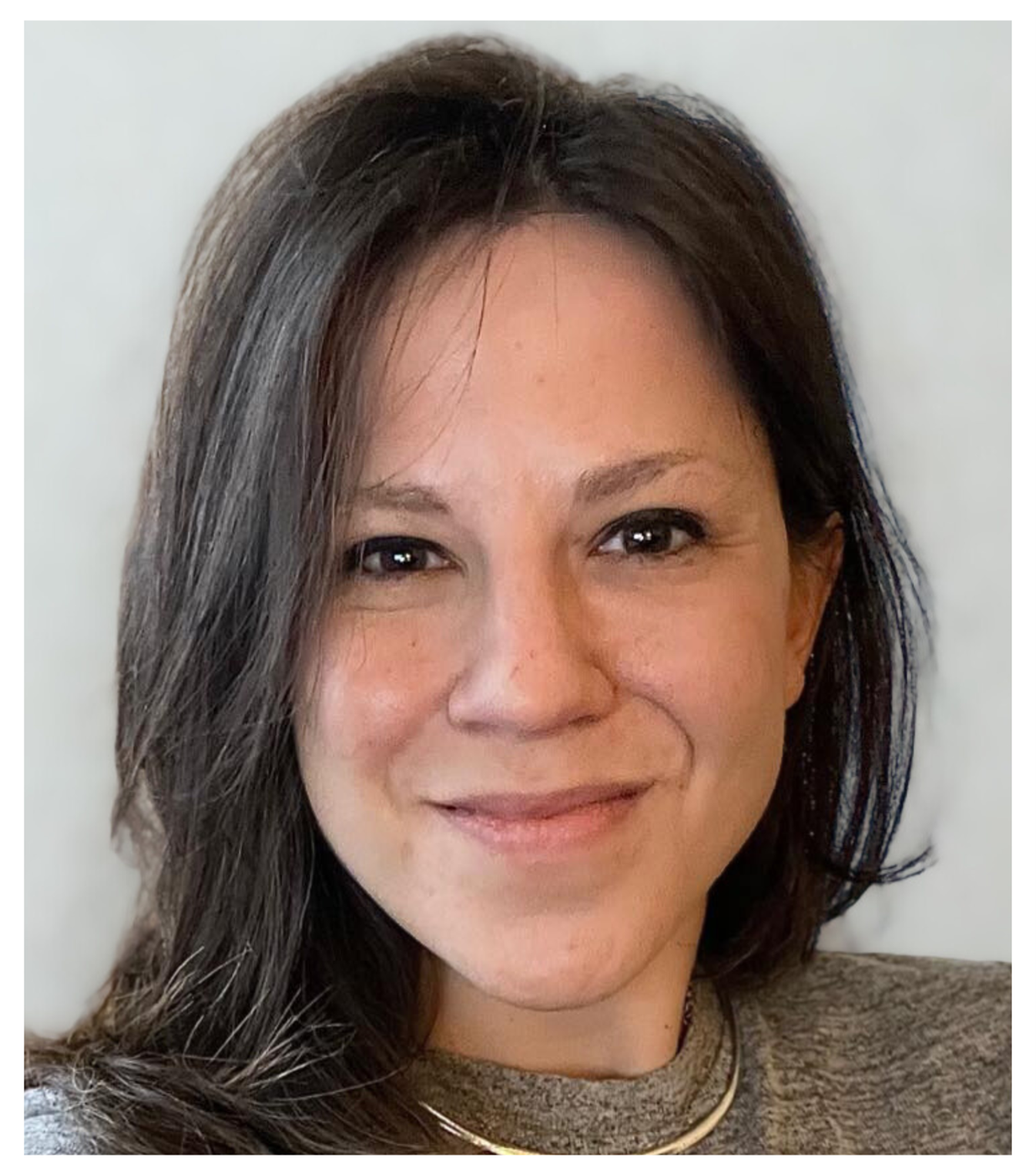
Laura Brown ’08 shares how her Hood education informs her work supporting asylum seekers and immigrants.
Worth the Work
Program
- English (B.A.)
- Political Science (B.A.)
- History (B.A.)
Department
- English
- History
- Political Science, Law & Criminal Justice
Laura Brown ’08 majored in English and history at Hood College. Today, she serves as the executive director of Asylee Women Enterprise (AWE), a Baltimore-based nonprofit that supports asylum seekers and immigrants. In the conversation below, Brown discusses the value of her Hood education and the advocacy work she does with AWE.
What led you to attend Hood College, and how did you become interested in studying English and history?
I knew I wanted to attend a small liberal arts school. I visited several colleges, but Hood was my favorite. It’s such a beautiful campus, and I immediately felt like I was part of a community. I also loved the way the College approaches education. At Hood, learning didn’t feel confined to a single exam or paper—it felt ongoing, like something you stepped into rather than something you completed. I was drawn to English and history because I’ve always been interested in stories and how they’re told—whose voices are included, whose are left out and how those choices shape our understanding of ourselves and the world around us. My education at Hood brought those interests together in a way that felt both exciting and challenging, but also surprisingly practical.
What was your proudest achievement as a Hood student?
In my senior year, I took a class on presidential decision-making taught by the director of the National Center for Medical Intelligence, who served as a guest professor. In the class, I wrote a paper examining how leaders responded to past epidemics and what we can learn from those decisions today. The professor later shared the paper with the Deputy Secretary of State.
Did you have any faculty mentors who helped shape your education?
Professor Len Latkovski, who served as chair of the history and political science department, was incredibly influential. He taught me to question how history is constructed, to look beyond official records and to value the voices that are often left out. He didn’t present history as a fixed set of answers, but as something pieced together from incomplete records and competing accounts—something that evolves as new information surfaces and new voices are included. And he taught me to approach learning and information with humility, curiosity and care. He fundamentally shaped how I think and understand the world.
Tell us about the Asylee Women Enterprise—what is your role within the organization and why is its mission so important for helping immigrants and asylum seekers?
I’m the executive director of Asylee Women Enterprise (AWE), a nonprofit in Baltimore that supports asylum seekers and immigrant survivors of human trafficking. I am also a Department of Justice Accredited Representative, which allows me to practice immigration law as a non-attorney in a nonprofit setting. AWE provides holistic services to people who have fled persecution and violence and are seeking humanitarian protection in the United States. We help clients apply for asylum and other forms of legal relief, while also providing medical and mental health care, case management and helping meeting basic needs. Asylum seekers and other forced migrants are navigating complex legal systems while dealing with significant trauma and instability. We work to ensure they have the support they need to navigate the legal process and rebuild their lives in the United States with safety and dignity. Our work is especially critical right now, as immigration policies are rapidly shifting and many immigrants are facing growing uncertainty and new challenges.
How do you apply your Hood education to the work you do for AWE?
I use the skills I developed at Hood every day. Much of my work involves helping people apply for asylum. To qualify for asylum, they have to clearly explain what happened to them, provide extensive evidence and show how their experiences fit within specific legal standards. That means creating a record of their experiences and connecting it to a broader social, political and historical context—such as political repression, conflict or the systemic targeting of certain groups. My education at Hood prepared me for this work. At Hood, I learned how to gather information thoroughly and interpret it carefully, recognize gaps in the record, and seek out sources and stories that haven’t been recorded. I also learned how to craft clear arguments and use language with care—skills that are essential to every part of my job, whether I’m preparing an asylum application, writing a grant proposal or just listening to a client’s story.
What advice would you offer to current Hood students who are interested in pursuing careers in law or nonprofits?
The skills you gain as a humanities student are incredibly valuable and very transferable—don’t underestimate them! Being able to read closely, write clearly and think critically is essential in any field. If you’re interested in law or nonprofit work, it’s also worth knowing that there isn’t just one path. Those same skills can be applied in many different ways. There are many ways to do meaningful legal and nonprofit work—it’s about finding where you can use your interests and skills in a way that actually feels useful and meaningful to you.
Are you ready to say Hello?
Choose a Pathway
Information will vary based on program level. Select a path to find the information you're looking for!