
About this Program
Uncover the past and preserve history for future generations.
Program Overview
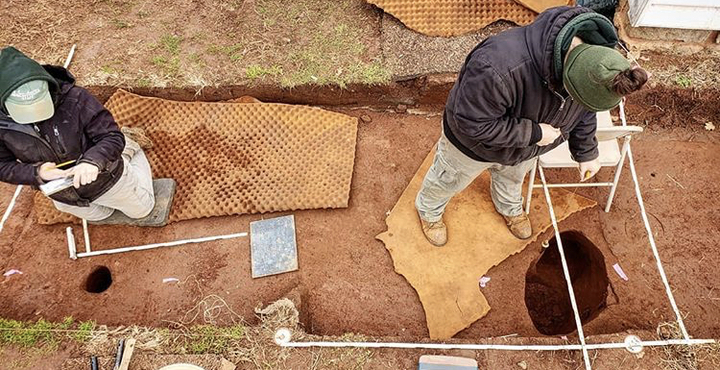
The interdisciplinary archaeology minor combines coursework in art, literature and history. Students can gain experience conducting real archaeological fieldwork at local historical sites or even complete an optional archaeological internship with a museum, nonprofit or historical society. Students majoring in a number of fields, including history, literature, foreign languages or the sciences, may wish to minor in archaeology, as it can complement the major field and introduce new areas and methods of study.
Please refer to the course catalog for more information.
Degrees Offered
- Minor
Department Offering
Are you ready to say Hello?
Choose a Pathway
Information will vary based on program level. Select a path to find the information you're looking for!
Required Courses
- ART 220 Global Art and Architecture I
- ART 312 Archaeology: Cultures, Technologies, Methods and Theories
- ART 370 Archaeological Fieldwork; or
- ART 380 Archaeological Laboratory Analysis; or
- ART 399 Internship in Art
- ART 399C Archaeological Internship & Fieldwork Colloquium
Electives
One of the Following
- ART 231 Archaeology of Native North America
- ART 340 Art of Prehistory
- ART 349 Art of Egypt and Mesopotamia
- ART 350 Classical Art and Archaeology
- ARLS 354 Mesoamerican Art and Archaeology
One of the Following
- ANTH 201 Introduction to Anthropology
- CL 202 Mythology
- HIST 365 The Ancient Near East and Greece
- HIST 366 Ancient Rome
Total credits: 16.0
What majors pair well with the archaeology minor?
Explore complementary majors that build upon and tie into the archaeology minor.
Art and Archaeology, Art History Concentration
Archaeological-excavated material is often studied through art historical methods of inquiry. Art historians gain significant insights into the cultural contexts in which objects and artworks were used through archaeological excavations.
English
English hones your storytelling and analytical skills; archaeology adds depth through material culture and historical inquiry.
History
Museums and cultural institutions require expertise in the history of cultures assessed through the archaeological record, including decorative arts, material culture, human remains, architectural remains and craft/industrial production. History as a discipline inextricable from knowledge gained through archaeology.
Law and Criminal Justice
Repatriation, restitutions, reparations, wartime looting, inheritance law and ethics play major roles in current museums, higher education institutions and auction houses with archaeological material. Lawyers often specialize in cultural heritage and repatriation. Police, security and detective agencies often work with archaeological sites and collections.
Program Contact

Professor of Art and Archaeology